- 작품명 :
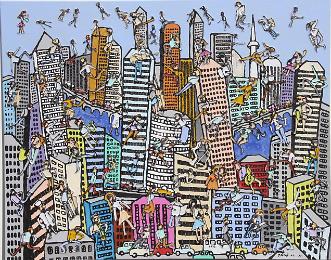
- 도시의 축제
-

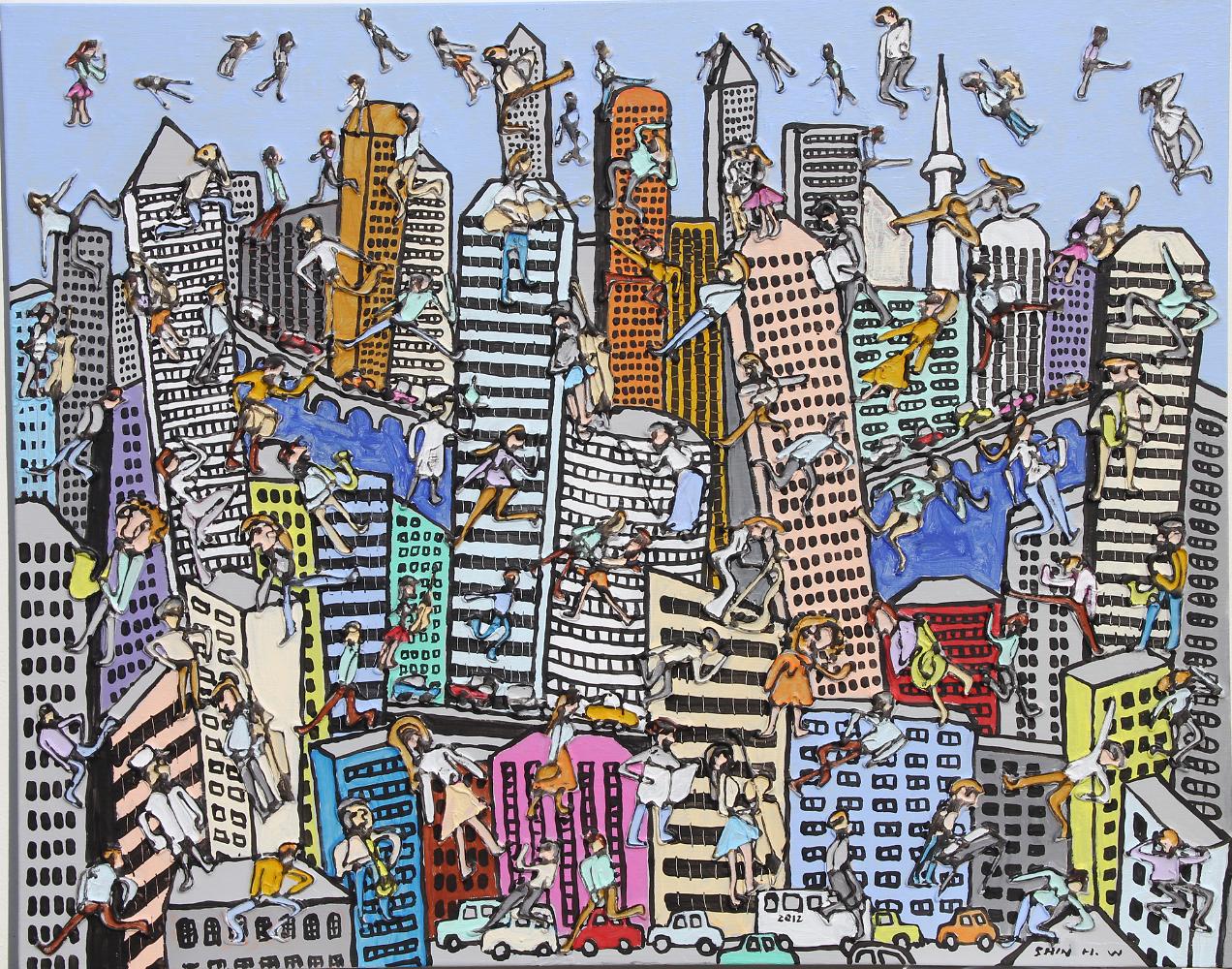
- 작가명 : 신흥우, Technical Mixture 91 x 72cm 2012
 작품을 클릭하시면 큰 화면으로 감상하실 수 있습니다.
- 작가노트
-
내그림의 주제는 항상 " 누구나" 혹은 "아무나"이다. 고로 이세상 모든 사람들이 내그림의 모티브인 셈이다.
때로는 시장어귀의 어느 한 허름한 대포집 에서 본 주름 깊은 나그네의 얼굴일 수 도 있고,
인적 드문 내 작업실 옆길을 깔깔대며 지나가는 해맑은 꼬맹이들의 모습이기도하고, 십여년 전 에펠탑 앞 기념품 가게주인의 뚱뚱한 모습일 수 도 있고, 찰리 채플린처럼 우스꽝스런 영화 속 인물일 수도, 바이올린을 연주하는 내 딸의 모습일 수도 있다.
이런 천차만별의 기억의 편린들이 과거와 현재 구분 없이 놀이동산의 열차처럼, 때론 빠르게, 때론 천천히 지나간다.
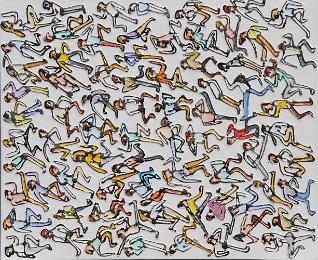
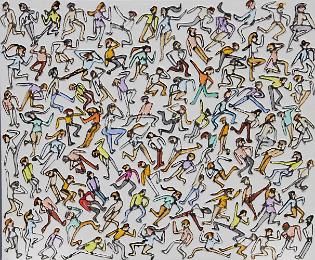
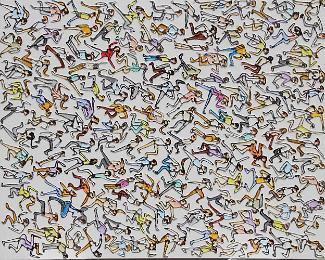
기억하기 싫은 아픈 기억, 혹은 즐거운 기억을 줬던 사람들, 혹은 잡지책에서 봤거나 꿈속에서 본 사람이거나 그야말로 누구나 를 막론하고 아무 구분 없이 머릿속에 떠오르는 대로 자동 기술적으로 실리콘 주사기를 통해 사람형상들을 그려서 만들어낸다. 이렇게 해서 탄생되어진 수백 수 천개의 사람형상들은 각기 태어난 시간과 기억의 연관성들을 무시당한체로 아무렇게나 뒤섞여 그저 한 점의 그림 속 일원이 되어 운명적인 만남(인연)을 이루며 영원히 박제되어 가두어진다.
이런 모티브와 작업과정 속에서 연관지어본 나의 근작인" 도시의 축제"는, 도시라는 시스템에 익숙해져있는 나에겐 더욱 더 살을 보태기에 편안한 장소로서의 소재가 아닐 수 없다.
도시라는 곳이 차가운 콘크리트와 아스팔트로 이루어진, 때론 피 튀기는 살벌한 생존경쟁의 장이기도 하지만, 내게는 도시란 항상 따뜻하고 재밌는 에피소드가 많은 그런 흥미로운 사람들이 활보하는, 에너지 넘치는 곳으로서의 이미지가 강한 것 같다.
거리를 배회하는 수많은 표정의 사람들은 실은 모두가 다 나의 공짜 모델들이다. 요즈음의 내 그림 속에 등장하는 인물들은 어린시절 부터 즐겨 그려왔던 실제 모델 습작들과 아무데나 휘갈겼던 수많은 낙서들의 결과로서 주어지는 소산물이라고나 할까?
헤아릴 수 없이 많은, 그러나 각기 다르게 생긴 흥미로운 사람들의 모습들은 내가슴 속 깊이 존재해있는 게으르고 둔한 열정을 자극한다. 항상 수많은 사람들로 가득 채워 이루어지는 내 작업공간은 이런 서로 모르는 사람들끼리 뒤섞인, 그런 알 수 없는 우리의 운명이자 범 코스모스적인 인간들의 세상이다.
서로 다른 모습으로, 서로 다른 생각을 함에도 불구하고 차별없이 서로 존중하며 살아가는 재미있는 세상을 꿈꾸어본다.
Artist Statement
The theme of my work is always ‘everyone’ and ‘anyone’. The motif of my work is all the people in the world. They include a traveler with a deeply furrowed face I saw one day at a market entrance; bright little boys and girls passing beside my studio; a fat souvenirshop owner I met by the Eiffel Tower about 10 years ago; a ridiculous figure in a film like Charles Chaplin; and my daughter playing the violin.
The fragments of memories pass like a ride in an amusement park quickly or slowly.
Depending on automatism, I depict those who left me painful or delightful memories, those who I have seen in a magazine or a dream with a silicone syringe as they come to my mind. A myriadof figures remain randomly blended without considering the time they were born or any connection with their memories. They become part of a painting, confined eternally to the painting by destiny.
In my recent work An Urban Feast, the city is the subject matter from which I can derive more stories as I am familiar with this.
While the city covered with cold cement and asphalt is oftenconsidered a battle field of cutthroat survival, I regard this as a place brimming with warm, interesting episodes and energy.
The people wandering the streets are all my free models. Figures recently appearing in my paintings are all from my studies of models I have painted in my childhood and scribbles I drew.
Numerous people who are all interestingly different in their outer appearance stimulate the lazy, dull aspiration hidden deep in my heart. My work space is always filled with a world of pan-cosmic people unfamiliarto one another.
I dream of an interesting world where all can live without discrimination even though they look different and have different ideas.

- 작가 평론
-
글. 김성호(미술평론가)
삼인칭 복수와 일인칭 복수의 경계 : 신흥우의 사람들
‘신흥우가 그리는 사람들’이란 그의 인생 속에서 스치고 지나간 수많은 특수적 인물들이 서로 녹아들고 스며들면서 중화되거나 복합된 ‘익명의 보편적 인물들’ 이미지로 나타난다. 오랜 파리 유학(1991-2003) 시절 동안, 만났던 많은 사람들의 얼굴들만큼이나, 그의 그림에 나타난 사람들은 인종과 성별, 나이, 외형별 모양새는 제각각으로 다양하지만, 그들은 그 어떤 특수자만으로 지칭되지 않는다. 그들은 보편과 특수를 오간다. 그것은 전체와 획일성의 그물 사이에서 찾아내는 알록달록한 사람들의 개별 이야기이자 모든 이들의 이야기가 된다. 신흥우의 사람 그리기라는 작업은 복잡다기한 정체성을 살고 있는 ‘보편자 현대인의 포괄적 정체성 찾기’이자 동시에 ‘특수자 현대인의 세세한 일기 쓰기’에 다름 아니기 때문이다.
신흥우가 그려내는 사람들의 이미지는 대상을 전제로 한 재현(representation)이 결코 아니다. 그의 심상 속에 자유롭게 유영하는 이미지들을 그저 현실계로 투영시켜내고 고착화시키고 있다는 점에서 그것은 다분히 표현(expression)이라 할 것이다.
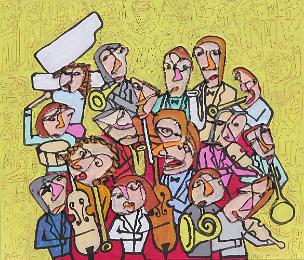
작가 신흥우는 마치 생명을 만들어내는 조물주처럼 자신의 드로잉에 뼈와 살을 만들어 입힌다. 그가 만드는 사람들은 때로는 색소폰이나 첼로를 다룰 줄 아는 음악전문인과 같은 인물들로 구체화되어 나타나기도 한다. 그렇지만 대개 그가 빚은 피조물들은 대부분 익명의 보편적 인물들이다. 즉 그것들, 그들, 혹은 그녀들이라는 3인칭 복수들로 통칭된다. 그(녀, 것)들은 도시의 빌딩 숲을 헤치고 하늘을 붕붕 날아다니거나 한바탕 댄스파티가 벌어지는 장에서 연신 하늘에 손가락을 찌르면서 발바닥을 비빈다. 그(녀, 것)들은 바로 우리이기도 하다. 즉 3인칭 복수들은 결국 1인칭 복수에 다름 아니다
신흥우의 작품 세계에서, 이러한 일인칭과 삼인칭이 복수의 형태로 만나 지점을 우리는 그의 얼굴 이미지를 통해서 보다 쉽게 이해해낼 수 있다. 즉 그의 작품에 나타난 얼굴들은 즉 그(녀, 것)들의 얼굴이자 바로 우리의 얼굴인 것이다. 얼굴이란 원래 우리의 시각(vision)에 근거한 지각(perception)작용에 있어서 너와 나의 정체성을 즉각적으로 구별시키는 기능을 한다. 예를 들어 우리는 한 인물의 뒷통수를 보면서 보편자의 그물코로부터 그 인물의 특수자의 세계로 끝내 건져 올려내지 못하지만, 얼굴을 보게 될 경우에는 이내 K씨, B씨의 정체성을 밝혀낼 수 있게 되는 것이다.
그런데 우리를 흥미롭게 하는 것은 그가 만드는 얼굴들은 모두 인물의 뒷통수처럼 표현되고 있다는 것이다. 어떤 인물은 코가 유난히 크고 어떤 이는 눈이 몰려 있고 어떤 이는 턱이 길면서 서로서로 차별화된 독특한 이미지들을 만들어내는데 왜 이러한 차별화된 이미지들을 인물의 뒷통수로처럼 표현되고 있다고 우리가 단정할 수 있는 것일까? 지나친 과장이나 개별체적 강조점은 외려 특수성을 갉아먹고 상쇄시켜내기 때문이다. 캐리커쳐(caricature)가 한 실존인물의 개별체성과 특수성을 잘 드러내지만 이러한 캐리커처들을 한데 모아놓고 볼 경우 그것들은 비슷비슷한 과장들로 서로를 갉아먹고 이내 뒷통수의 이미지들처럼 그 정체성이 모호해지게 된다. 다양한 인물들은 결국 보편성으로 치환되고 우리와 같은 1인칭 복수로 뭉뚱그린 채 드러나게 된다. 마치 개성이 가득하고 유별나게 다른 사람들이 모두 신(神)을 닮았다는 점에서 동일한 것처럼 말이다.
아담 없는 하와의 질료적 무성생식 : 신흥우의 물질 회화
최초의 인간 아담(Adam)은 자존감을 가질 수 없었다. 야훼의 얼굴을 물려받고 신으로부터 피조되었기 때문이다. 최초의 인간 아담은 신의 얼굴을 모방한 채 신의 말씀을 입고 태어났다. 이윽고 조물주의 인간창조는 아담의 뼈를 취해 하와(?aww?h, 이브)를 만들고 나서야 완성된다.
그런데 아담의 탄생 뒤로 가려져 잘 조명되지 않던 하와의 탄생을 우리는 눈여겨 볼 필요가 있다. 그런 까닭은 신으로부터 말씀이라는 언어체계로 지시되고 창조되어진 세상만물 중에서 유일하게 신의 노동력을 요구한 대목이 바로 여성 창조를 통한 인간의 완성이었다는 것에서 기인한다. 흙(adama)이라는 무한의 질료를 통해 생성된 남자(Adam)와 이로부터 선택된 오브제(아담의 뼈)가 아상블라주로 변모된 여자(Haww?h)의 창조는 스스로 존재하는 신에게 있어 최초로 부려진 미술행위인 셈이다. 그 중에서 아담의 어원이 사람이라는 존재를 지칭하고 있음을 상기할 때 아담을 통해서 인식되어져 온 남성위계질서의 인간 대표성은 다분히 언어적인 현상학의 측면을 반영한다. 반면 하와로 구체화된 질료의 세계는 인간 개별성 혹은 인간의 특수성을 상징하는 시각적인 물체계를 담보한다.
이처럼 신에게 언어로 가능했던 무수한 창조 프로젝트 속에서 유일하게 미술적 노동력을 함께 요구했던 것은 인간, 특히 하와로 대표되는 인간(아담으로 대표되는 인간이기보다는)이었다. 그런 만큼 아담에 대한 하와의 정체성은 언어에 대한 이미지, 환영에 대한 실제, 미술에 대한 현대미술이라는 복잡다기한 논의의 출발점을 제공한다.
신흥우의 얼굴 작업 (특히 시리즈 작업 ‘창조프로젝트’)에는 하와에 대한 이러한 시각적인 개별체로서의 인간존재 인식이 그 바탕에 본질적으로 깊이 깔려 있다. 그는 실리콘이라는 질료를 통해 무수한 하와의 자손들을 만들어내고 또 만들어낸다. 주사기를 통해 연속적으로 밀려 나오는 실리콘이라는 특이한 재료는 이러한 인간의 다양한 형상들을 즉흥적이고 무작위적인 오토마티즘의 기법으로 만들어내기에 제격이다. 그런 면에서 신이 아브라함에게 축복한 ‘자손의 번창’이 인간의 이성 교접에 의한 것이었다면 신흥우가 창조하는 인간 번창이라는 것은 남성 없는 하와 스스로의 무성생식 혹은 실리콘 매체의 끊임없는 세포분열과 증식의 과정처럼 보인다. 모든 인간들이 그로부터, 그의 창조프로젝트로부터 출생한다. 그의 가족, 그가 만났던 여인, 친구 혹은 그가 스쳐지나갔던 수많은 사람들의 얼굴들은 물론이며 그가 만나지 못한 수많은 타지의 인간들과 미래의 후손들까지 그의 무의식적 기억과 상상의 창고 속에서 실리콘을 통해 밀려나와 다시 태어나기를 끊임없이 되풀이한다.
그 개별체들은 하나도 똑 같지 않는 철저한 비동일성과 비반복성의 자손들로 출발하지만 모두 하와(작가 신흥우)의 자손이라는 점에서, 동일군의 인물들이 된다. 저마다 캐리커쳐 같은 희화된 얼굴 이미지를 간직하고 있는 피조된 이 상이성의 개별체들은 동일성의 군집으로 변모되면서 그의 창조 작업은 완성된다.
하와의 자손들을 연신 만들어내는 신흥우의 회화는 실리콘이 그 전면에 작동하고 있다는 점에서 가히 물질 회화라 할만하다. 특히 이 물질성은 신이 아담의 갈비뼈를 취해서 만들어낸 하와의 정체성과 닮아 있다. 하와에게 있어, 스스로 자존적이지 못한 재료, 아담에게 귀속되는 종속적 피지배체계는 오늘날 미디어의 발전에 기생하고 있는 현대미술의 재료학과 다를 바 없다.
신흥우의 물질회화는 폐지들을 바닥에 깔아놓고 그 위에 실리콘을 밀어내면서 가느다란 선 모양을 뽑아내는 것으로 시작된다. 밀려나오는 실리콘의 흐름을 끊지 않고 연속적인 드로잉으로 만들어내기 위해서는 순간적이고 즉발적인 행동들이 요청된다. 즉 마치 크로키를 하듯이 빠른 필선과 더불어 선들을 구불구불하게 이어지게 만들어내는 일이 절대 관건이다. 때로는 얼굴들만, 때로는 몸통과 팔다리가 함께이기도 한 이 크로키와 같은 인물들은 드로잉 순간의 매우 빠른 속도감을 드러내듯이 자유롭고 활력있는 표현적 이미지들을 우리에게 보여준다. 이 실리콘 인물들은 단색의 색칠을 입고 바탕으로부터 떼어져서 수북이 쌓인 채, 캔버스에 붙여지는 다음 작업에 투입되기를, 기다린다.
회화적 조각, 조각적 회화 : 신흥우의 테크니컬 믹스처
신흥우의 실리콘으로 그려진 인물들은 오랜 기다림을 거쳐 작가의 선택에 의해서 비로소 따블로 작업에 또는 조각 작업에 편입되어 들어간다. 그가 무작위로, 즉발성으로, 오토마티즘으로 그려낸 인물들은 작가 신흥우가 배치하는데 따라서 비로소 자신의 옷과 색깔을 맞춰 입고 재탄생할 수 있는 것이다. 더러는 춤추는 사람들로, 더러는 악기를 다루는 사람들로 실리콘 인물이 미리 철저한 준비를 거친 후 배치를 기다리는 경우도 있지만 대개의 실리콘 인물들은 각기 다양한 포즈와 표정의 얼굴을 한 사람들로 마련되어 캔버스나 조각으로의 제2의 탄생을 기다린다.
실리콘으로 시작된 그의 물질 회화는 분명코 회화로 출발하고 있음에도 재료의 특성상 부조와 같은 3차원적 특성이 강화되고 있는 연유로 언제나 그의 작품을 회화적 조각 혹은 조각적 회화로 위치시킨다. 그것이 조각이나 설치적 영역으로 이미 넘어선 조각적 설치 혹은 설치적 조각이 아니라면, 대부분 평면작들은 조각이나 설치로 확장하려는 듯 잔뜩 웅크리고 있는 평면 속의 다이내믹한 긴장을 드러내는 것들이다. 실리콘, 아크릴, 미디엄들이 뒤섞이고, 평면과 입체가 교류하는 그의 테크니컬 믹스처(technical mixture)라고 하는 다매체적 특성의 물질 회화는 그의 작품을 이처럼 매우 활력있게 하는 바탕이 된다.
지금까지의 작가 신흥의 작업 변화를 지켜볼 때, 그의 파리에서의 13년간은 오랜 창작 기간에도 불구하고, 실리콘의 자유로운 드로잉 방법론에 대한 매력 자체에 푹 빠져 있었던 까닭에 그 이상의 특별한 변화를 구체화하지 못했던 초기시대로 통칭할만하다. 물론 이 시기의 창작들이 건네는 감흥들을 우리는 결코 간과하지는 못할 것이다. 마치 캐리커쳐 같은 인물들의 다양한 표정들이 꿈틀거리고 있는 그의 재현과 표현의 경계 선상을 오고가는 초기 캔버스작품은 관객들의 시선을 일순간 빼앗아 버릴 만큼 매혹적인 것들이었다.
다만 신흥우가 실리콘 인물들에 대한 보이기(to show)의 효율성을 도모하기 위해서 고안한 배치의 방법론은 오랫동안 매너리즘에 빠져있었던 것은 사실이다. 즉 바둑판과 같은 일정한 격자틀을 운영했던 증식과 멀티플(multiple)의 배치방법론이 그것이었다. 이러한 멀티플 배치방법론은 군집을 이루는 개별체들의 개개의 정체성을 대등하게 가시화시키는데 있어서는 매우 적절한 방법론임에도 불구하고 실리콘 인물들의 자유스럽고 풍부한 이미지를 오히려 틀 속에 가두어 둔다는 비판을 받기에 족하다. 즉 이것은 다양한 실리콘 인물들이 진열대위의 획일화된 수집이미지로 전환되고 말기에, 나름의 유의미성에도 불구하고 그가 끝내 벗어나야 할 창작방법인 것으로 필자는 평가해 왔다.
필자가 판단하기에, 그의 작업의 새로운 전환점은 2003년 귀국 후로부터 비롯되었다. 이미 파리에서 시도되었던 실험적 모색이 새로운 사유의 시공간을 만나 폭발적으로 전환되기에 이른 것이다. 그 중 대표적인 창작실험 중 하나는 이미 파리에서 시도된 바 있었지만 작품들로 구체화되지 못했던 조각에 관한 것이었다. 이 조각은 앞서 신흥우가 폐지 위에 무수히 그려 만들어낸 실리콘 드로잉들을 떼어내어 별도의 색을 입히고 다시 새로운 철심의 구조틀 위에 쌓아올려 만든 것이다. 즉 2차원 평면의 실리콘 인물들이 만들어내는 3차원 실리콘 조각인 셈이다.
조각적 어법은 그의 작품의 의미를 매우 새롭고 매력적이게 변모시켰다. 숭숭 뚫린 듯이 보이는 투과체의 3차원 공간으로 조성된 그의 인물상들은 익명의 두상들로부터 마를린 먼로, 모택동의 두상 혹은 밀로의 비너스 입상이라는 현대적 아이콘으로 다양하게 확장되어 간다. 예를 들어 2008년 필자가 전시감독으로 기획했던 창원아시아미술제에 초대되었던 신흥우는 이명박 대통령, 김연아 선수와 같은 동시대의 아이콘을 매우 큰 형태의 투과체 조각으로 만들어 출품한 바 있다. 이런 조각들은 제각기 다른 익명적 개별체들의 군집을 통해서 커다란 덩치의 하나의 아이콘을 만들어내는 것이다. 철사 뼈대가 훤히 들여다보이는 투과체의 가벼운 조각의 매체적 특징은 그 위의 저 마다 다른 색을 얹어 입은 실리콘 인물상들의 군집들이 형성하는 희노애락을 아주 즐거운 양태로 재생산시킨다. 그것은 실리콘 주사기라는 붓대를 잡고 작가가 즉발적으로 단숨에 만들어 내는 인물상들이 저마다 풍겨내는 해학적 분위기 탓이기도 하지만 이들이 뒤섞이며 팝적 혹은 키치적 분위기를 유발해 내고 있기 때문이다.
꼼꼼한 관객이라면 이토록 처절하게 가벼운 조각 위에서 개별체들이 들러붙은 또 다른 개체 생성의 모습을 살펴보면서 작가의 인간 존재론과 관계한 제법 무거운 주제의식 또한 발견해낼 수 있을 것이다. 즉 아담식의 언어적 인간 대표성에 저항하고 언제나 하와로부터 기인하는 구체화된 인간 개별성, 특수성에 주목하면서 인간에 대해 말해보고 싶은 우리들의 욕구 말이다. 그러나 인간 보편자와 특수자에 대한 철학적 사유와 같은 무거운 주제의식은 그의 작품 속에서 어디까지나 재기발랄한 양태로 해석되는데 집중한다. 그것은 관객의 직관적이고 경험적인 차원과 교류하면서 작동한다. 게다가 최근에 작가 신흥우는 실리콘 인물들을 집적해서 도깨비와 같은 신화와 문화의 영역으로 향한 아이콘들을 구상화함으로써, 작품 주제를 인간 존재론으로부터 한 단계 더 확장시켜내고 있는 중이다.
그런데 작업의 새로운 변화들이 그의 이러한 조각적 유형(회화적 조각)에서만 구체화된 것일까? 최근의 보다 깊이 있는 변화들은 일견 조각 보다는 회화(조각적 회화)에서 보다 더 근원적으로 잘 드러나고 있다고 할 것이다. 신흥우의 테크니컬 믹스처가 다분히 재료실험에 그치는 것이 아니라 감상자들과의 보다 효율적인 커뮤니케이션을 도모하는 차원에서 도모된 것처럼, 그의 작업은 이제 보다 근원적인 성찰에 집중한다.
유쾌한 그로테스크와 현대적 나비즘신흥우는 작품에서 세부적인 조형적 변화를 시도하는 것보다는 회화에 대한 근원적 성찰을 주요하게 간주한다. 다장르와 다매체를 병행하면서도 그가 여전히 회화에서 출발한 자신의 화가로서의 정체성을 깊이 인식하고 있는 탓이다. 그의 예술적 성찰은 여전히 회화에서 출발하고 그것에 집중한다. 변화는 이러한 성찰로부터 근거한 것이며 그의 조형적 효과, 즉 테크니컬 믹스처의 효과 역시 이러한 근원적 성찰로부터 근거한 것이다.
그렇다면 신흥우의 회화에서의 근원적 성찰이란 무엇일까? 그것은 예술창작을 이전처럼 창작자인 화가의 배설로 간주하는 것이 아니라 창작자(화가)와 수용자(감상자) 사이에서 상호작용하는 커뮤니케이션으로 간주하는 것이다. 이것은 신흥우에게 있어 예술에 대한 그 동안의 성찰에 대한 변화를 이끌어낸다. 작가는 오랫동안 언어로 정리할 수 없는 자신의 감정을 표현이라는 방법을 통해서 배설하듯이 시도하는 창작의도 자체를 예술의 주요한 가치로 고려해오고 있었다. 즉 창작자의 독창적인 세계관과 예술관이 그 무엇보다 주요한 것이라는 작가주의적 입장에 우선적 가치관을 두고 있었다.
그런데 신흥우는 감상자라는 수용주의적 입장을 적극 고려하게 되면서 최근에 예술창작 자체를 아예 비언어적 커뮤니케이션으로 이해하려는 모습을 자주 드러낸다. 그것은 대중들의 기호와 요구를 파악, 수렴하고 자신의 창작을 맞춤제작하는 방식으로 선회하고 있음을 의미하는 것이 절대 아니다. 그것은 자신이 던지는 조형적 메시지를 감상자들이 어떻게 수렴하고 그것에 어떻게 반응하는지를 조형언어를 통해서 다시금 성찰하는 것을 의미한다. 그는 취미로 한 두번 경험해본 피리, 하모니카, 통기타 외에 전문적 악기를 연주할만한 특별한 재능도 없고, 막춤 외에 탱고나 차차차 등 현란한 춤기술을 선보일만한 특별한 재능도 가지고 있지 않다. 그럼에도 그가 최근 음악, 무용과 같은 또 다른 예술과 그것의 향수에 대한 관심을 기울일 수 있게 된 것은 순전히 예술을 커뮤니케이션으로 이해하려는 최근의 그의 성찰들에 기인하고 있기 때문이다.
이러한 차원에서 그의 조형언어, 특히 무수한 사람들의 얼굴에 등장하는 그로테스크(grotesque)는 매우 주요하다. 원래 동굴(grote)이라는 이탈리어에서 유래한 이 용어는, 식물, 동물 그리고 사람이 기괴한 형태로 어우러져있는 일종의 장식을 지칭했다. 그것은 오늘날 극도의 부자연스러운 것, 괴기하고 우스꽝스러운 것이라는 의미로 사용된다. 그런데 여기에는 매우 이질적인 두 미학이 겹쳐 있다. 하나는 공포이고 하나는 웃음이었다. 그것은 부정적 숭고의 개념과 민중적 공예 미감이 교차하는 아이러니의 합체였던 셈이다. 그로테스크는 우리의 일상사가 표방하는 희노애락(喜怒哀樂)의 정서를 극대화된 대비적 요소의 형태로 한 몸에 담고 있다. 슬퍼 보이는 듯한 몸짓이 실상은 기쁨의 표현이거나 신명난 듯한 탈춤이 실상은 한(恨)의 정서를 담고 있다는 아이러니컬한 사실은 이러한 그로테스크의 미학에서 유감없이 발휘된다.
마냥 즐거운 듯이 보이는 신흥우의 사람들은 이처럼 자신들만의 자잘한 고난, 슬픔의 개인소사와 별리된 사람들이 아니라, 그것을 끌어안고 상호 치유하면서 관계를 맺고 있다. 그런 면에서 그로테스크는 “알려진 것과 알려지지 않은 것 사이, 인식된 것과 인식되지 않은 것 사이, 곧 의식의 가장자리에 위치한다.”에 위치한다는 미학자 하르팜(Harpham)의 언급은 신흥우의 작업을 이해하는데 있어 매우 적절한 표현이 된다. 즉 그로테스크 미학은 교정되어야 할 일종의 탈선으로 보는데 답이 있는 것이 아니라, 표면 뒤로 숨겨진 끌어올려 희노애락의 정서를 강력히 이중체험케 하는 경험으로 바라봄이 마땅하다. 이것은 공포와 웃음, 슬픔과 기쁨, 아픔과 즐거움이 우리 인식의 과정 사이(interval)에 끊임없이 개입함으로써 우리의 정서를 다독여준다.
표상적으로 그로테스크를 유쾌함으로 내세우고 있는 신흥우의 작업은 그의 작업을 바라보는 많은 감상자들로 하여금 즐거움을 먼저 떠올리게 만들면서도 각자의 개인소사의 슬픔과 고뇌들을 함께 떠올리게 만듦으로써 오늘날 현대인의 정체성을 따뜻한 가슴으로 이해하게 만든다. 그래서 작가 신흥우가 과장과 왜곡이라는 그로테스크 미학을 전면에 배치하여 구성한 사람들은 이 시대의 표피적인 초상이 아니라 뜨거운 피를 가지고 희망과 좌절을 함께 먹고 함께 나누며 살아가는 백인백색의 현대인의 초상에 다름 아니게 된다.
또한 마치 아동화 같은 형식으로 단순, 절제의 미감을 안고 있는 신흥우의 사람들은 앙리 루소(Henri Rousseau)의 소박주의, 즉 나비즘(Nabism)를 현대적으로 재해석한다. 신흥우 작품에서의 이러한 변화는 기실 그의 파리 시절로부터 잉태된 것이었지만, 2003년 귀국 후에 구체화된 것이며, 보다 근원적인 것은 그가 실제적으로 인생을 되돌아보는 시간이 앞으로 살아갈 시간보다 많아지기 시작하면서 자연스럽게 표출된 것이다. 또한 그것은 잘 그리기의 능력이 출중한 그의 뎃생력을 뽐내기 보다는, 그리기라는 근본적인 질문을 성찰하고, 그림이라는 것이 너와 내가 공유할 그 무엇임을 성찰하면서 이르게 된 자연스러운 결과이다. 신흥우의 최근작들은 외양은 화려하고 그저 신나기만 한 현대인의 초상처럼 보이지만, 그것은 마치 신라시대의 토우처럼 토속적이기도 하고, 문인화의 사의적 경지에까지 이르기도 한다. 또한 그것은 가슴 절절한 희노애락의 개인사들이 묻어있는 것이기도 하다.
유쾌한 그로테스크와 현대적 나비즘이 결합된 그의 그림이 앞으로 어떤 식으로 전개되어갈지는 그 자신밖에 모른다. 아니 그도 모를지 모른다. 세월의 힘을 의탁하고 그것에 몸을 의지한 채 화가라는 이름으로 평생을 살아가면서 같은 꿈들을 가졌던 많은 이들에게 꿈과 희망을 주고 그들과 삶을 함께 나누는 것 자체가 그에게는 더 주요할 수 있기 때문이다. 어떠한 흥미진진한 변화를 도모하기 보다는 화가로서 살고 있는 그 자체가 행복처럼 보이기도 한다. 신흥우의 그림에서 앞으로 어떠한 변모가 구체적으로 전개될지는 가늠할 수 없지만, 오늘도 그의 그림으로부터 삶의 힘을 받고 삶의 의미를 되뇌는 사람들이 있는 한, 그의 ‘사람 그림’은 앞으로도 인간 냄새 풀풀 풍기는 따뜻한 그림들로 지속될 것임에는 틀림없어 보인다. ●
Shin Heung-woo’s Physical Painting and Cheerful Grotesque
By Kim Sung-ho, Art Critic
The border between the third-person plural and the first-person plural: Shin Heung-woo’s people
‘People Shin Heung-woo depicts’ appear as ‘anonymous general people’ through the fusion, permeation, and combinationof numerous figures he met in his life. They are as diverse in race, sex, age, and outer appearance as those he met in Paris where he studied between 1991 and 2003. They appear universal yet also specific. The narratives Shin’s people convey are individual and universal as well. Shin’s portrayal of people aims not only to discover ‘universal contemporary humans’ complex identity’ but also to write a detailed diary of ‘specific contemporary humans’. The images of people Shin illustrates are never based on reproductions of objects. His freely floating mental images are reflections onto or a fixation in reality.
As God creates life, Shin adds bone and flesh to his drawings. Those who he creates are at times musicians playing the cello or saxophone. However, they are mostly anonymous universal figures. They are usually referred to in the third-person plural: those and they. They (those women, these things) fly through the sky, or dance at a party. They are none other than ‘we’. The third-person plural is at last same with the first-person plural. We can confirm this fact more easily in the faces of the images Shin portrays. The faces in his work are their faces and simultaneously our faces. In terms of visual perception, the face functions to immediately distinguish your identity from my identity. In others words, the face is an indicator of one’s identity.
The faces he creates look like the backs of heads, but each face has a distinctive image: a face with a particularly large nose; a face with close set eyes; and a face with a long chin. If so, why can I say these distinctiveimages are expressed with the backs of heads? This is why excessive exaggeration and strong emphasis on individuality may decrease distinctiveness. A caricature eloquently represents a figure’s individuality and distinctiveness, but many caricatures gathered together show blurred identities due to their similar exaggerations and distortions. Diverse figures eventually become universal as if people with distinctive individuality are the same in that they all resemble God.
Asexual reproduction of Eve without Adam: Shin Heung-woo’s physical painting
Adam, the first human being, could not have self-respect because he was created by Yahweh and his face was inherited from Him. Adam was born with God’s face and by his words. God’s creation of humans was completed when he made Eve (Hawwah) from one of Adam’s ribs. We need to pay attention to the birth of Eve that has been often hidden by the birth of Adam. While all creatures were referenced and created by God’s words, only Eve was created by God’s labor. The creationof Adam with the material of earth, and Eve from one of his ribs was for God the first artistic act.
If we consider that Adam means ‘man’ or ‘mankind’, the male dominant order through Adam reflects an aspect of linguistic phenomenology, whereas the world of material represented by Eve reflects the system of visual objects symbolic of human distinctiveness. The project of creation among God’s numerous projects that demanded His labor was the creation of Eve (not the creation of Adam). Eve’s identity offers the threads to complex issuessuch as language and image, and illusion and reality in contemporary art.
Shin’s face work (especially his Creation Project) is based on his awarenessof the existence of the human being as a visual individual. He keeps creating descendants of Eve with silicon. The unique material of silicon applied with syringes allows him to make a variety of human figures through random automatism. While offspring flourished through sexual intercourse as God celebrated Abraham, Shin’s proliferation of man seems to be made by asexual reproduction or silicon’s incessant cell division and proliferation.
Innumerable people come into being from his Creation Project. Not only his family members, women he befriended, friends and people he met but also humans in other areas he has never met and future descendants emerge from the store of his unconscious memories and imagination through silicon. All of them are completely different, but belong to the same group of people in that they are all descendants of Eve (artist Shin Heung-woo). As these disparate individual figures with caricatured faces become part of a group with the same identity, his work is completed.
Shin’s act of continuously producing descendantsof Eve can be referred to as physical painting in that silicon is mainly used for its creation. This physicality adopts the way that God made Eve from Adam’s rib. Eve’s subordinate position to Adam can be likened to how modern materials are subordinated to the development of media. Shin’s physical painting begins by drawing out thin silicon lines after spreading waste newspaper on the floor. Momentous, immediate action is required to continuously draw without cutting the silicon. In this work the key is to generate meandering connected lines swiftly. These sketch-like figures represented only with faces or at times with their bodies are unrestricted and lively. These monochrome silicon figures are then glued onto the canvas.
Pictorial sculpture, sculptural painting: Shin Heung-woo’s technical mixture
Shin’s silicon figures are chosen by the artist and applied to his tableau or sculptural work. These figures illustrated at random, immediately, and automatically are reborn with their own costumes and colors, depending on Shin’s arrangement. Some are dancing or playing musical instruments, but most of his silicon figures wait for a second birth on canvas or in sculpture. His physical painting surely derives from painting, but can be defined as pictorial sculpture or sculptural painting due to its relief-like three-dimensional quality reinforced by silicon. His physical painting exudes a dynamic tension on the plane, trying to expand to the arena of sculpture or sculptural installation. His physical painting with multi-media traits is enlivened by the technical mixture of silicon, acrylic, and other mediums, in an exchange between two dimensionality and three dimensionality.
The 13 years he stayed in Paris can be defined as his early years. Despite length of this period he did not pursue any change as he was immersed in unrestricted drawing in silicon. Of course, impressions from work created in this period are significant. His early canvas paintings featuring caricatured figures are so alluring and draw viewers’ attention. However, the methodology of arrangements Shin contrived for efficiency in showing silicon figures fell into mannerism: the methodology uses a frame like a checkerboard. Although this methodology is very appropriate in equally visualizing each individual’s identity, it is criticized for confining silicon figures’ rich, liberal images to a frame. As this methodology transforms various silicon figures into standardized images on the plane, I evaluate this from as something he should escape despite its significance.
His return to Korea in 2003 was a turning point in his work. Experimental explorations he already attempted in Paris explosively changedin the space-time of new mediation. His creative experiments with sculpture in Pairs needed to be concretized. His sculptures were made by applying separate colors to silicon drawings and piling them on a metal-frame structure. This was three-dimensional silicon sculpture made with two-dimensional silicon figures.
This sculptural language produced fresh and attractive work. His pierced three-dimensional figures expanded from anonymous heads to modern icons such as Marilyn Monroe, Mao Zedong and the Venus de Milo. For example, Shin presented icons of the times such as President Lee Myong-bak and celebrity figure skater Kim Yuna made in a large-scale pierced sculpture to the 2008 Changwon Asia Art Festival I curated as an exhibition director. This sculpture portrayed a huge iconic figure in a group of anonymous individuals. These light-hearted sculptures, with a visible steel wire skeleton, showed joy, anger, sorrow and pleasure with a group of multi-colored silicon figures. Because of this, each figure the artist created extemporaneously with a silicon syringe instead of a brush provokes a witty atmosphere, and a mixture of these figures also generate a pop art-like, kitschy atmosphere.
A careful viewer may discover his somewhat serious thematic consciousness related to human existence in a group of figures shaping a seemingly light sculpture. Found in this work is our desire to commenton humanity, taking note of specific, special individuals like Eve, while resisting against universal humans like Adam. However, this serious theme of the universal and the individual is treated in a light-hearted manner in his work. This interpretation is made in exchange with the viewers’intuitive, empirical involvement. Shin recently further expanded his theme from human ontology, by realizing mythic, cultural icons like goblins through an integration of silicon figures.
Is this new change realized in his recent sculptural work (pictorial sculpture)? His recent painting (sculptural painting) has undergone a more profound change than his sculptural work. His work concentrates more on fundamental introspection, employing his technique for effective communicationwith appreciators not for mere experimentation with material.
Cheerful grotesque and modern Nabism
Shin Heung-woo considers introspection within painting more significant than detailed change in form. This is why he is acutely aware of his identity as a painter working in multiple genres and mediums. His introspection derives from and concentrates on painting, directing changes in his work and the technical mixture therein.
If so, what is an essential introspection in his painting? The introspection is about artistic creation as communication between the creator (painter) and receiver (appreciator), not as a mere excretion of the creator. This caused change in his attitude toward and introspection of art: he long considered the primary value of art as expressing his feelings beyond language, with importance on a creator’s ingenious view of the world and art.
Now he puts importance on the appreciators’ position, and sees artistic creation itself as non-verbal communication. This never means his work is tailor-made, responding to the general public’s propensity and demand. This means he reflects onhow appreciators embrace and react to his messages in his artistic language. He has no special ability to play musical instruments except for pipe, harmonica, and guitar he played as a hobby, and no special talent for dance. His recent interest in and enjoyment of music and dance derives from his reflection and understanding of art as communication.
In this respect, his use of the grotesque in innumerable faces is significant. The term, originated from the Italian ‘grote’, meaning cave, referred to a kind of decoration where plants, animals, and people blend bizarrely. The term today means something unnatural, eerie, and ridiculous, allowing two aesthetics to overlap: fear and laughter. The grotesque encapsulates emotions such as joy, anger, sorrow, and pleasure in one body. Aesthetics of the grotesque is eloquently represented by the fact a sorrowful gesture is an expression of joy and a cheerful mask dance carries the emotion of resentment.
Shin’s people always look delightful, but are connected to their own sad history and suffering, embracing and healing them simultaneously. In this sense the aesthetician Harpham’s statement "Grotesque is located between the known and unknown, the perceived and unperceived, that is, the margin of consciousness" clarifies Shin’s work. Aesthetics of grotesque thus regards the grotesque as a dual experience of joy, anger, sorrow, and pleasure, not as deviation to be adjusted. Fear and laughter, sorrow and joy, pain and pleasure thus solace our emotion through intervention within our perception.
Shins’ work, presenting the grotesque as something cheerful is delightful and sorrowful, demonstrating pain in personal history, enabling people to understand other people with a warm heart. People Shin creates by bringing aesthetics of the grotesque to the fore are not superficial portraits but portraits of many contemporaryhumans who live in hope and frustration.
Shin’s people in a naive style are a modern interpretation of Henri Rousseau’s Nabism. Initiated while in Paris, it has been concretized since 2003 when he returned to Korea. This style was naturally shaped as he had more time to look back on his life than time to live. It is naturally resulted from his essential question concerning painting, and his introspection of painting as something to share. Shin’s recent pieces look like splendid, delightful portraits of contemporary humans, but appear folksy like Silla clay dolls, reaching the level of literati paintings’ saui (meaning of painting and the spirit of the painter). They are also imbued with the personal history of joy, anger, sorrow, and pleasure.
No one knows how his fusion of the grotesque with a modern Nabism will develop. What’s important is to give dreamsand hope and share life as a painter. For him, living as a painter is good, rather than attempting change. Shin’s paintings of people remain warm-hearted and humanistic, as long as people are stimulated and encouraged by his work.
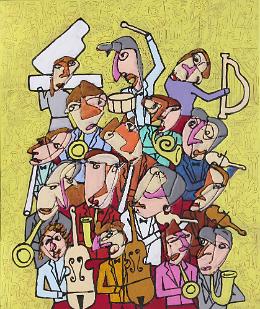
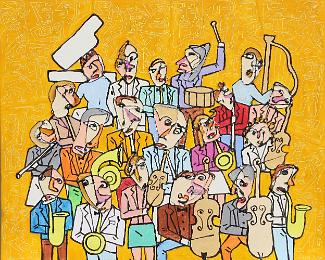
- '신흥우' 작가의 다른작품
-



인터넷신문등록번호 : 서울 아01858 등록일자 : 2011.11.24.
제호 : 마이아츠 발행인/편집인 : 김연우 발행일자 : 2011.11.24.
청소년보호책임자 : 김연숙 TEL : 070.7860.8516
Copyright © 2012 MYARTS CORP. ALL RIGHT RESERVED.